
Build a Yard That Doesn't Need Constant Watering
Xeriscaping in Tyler for homeowners managing high water bills or dry season stress
Legendary Landscapes LLC designs and installs xeriscape landscapes in Tyler and the surrounding area, creating outdoor spaces that stay green and functional without heavy irrigation demands. If you're dealing with rising water costs, brown patches that never seem to recover, or a lawn that requires constant attention just to look decent, xeriscaping replaces high-maintenance turf and thirsty plants with drought-tolerant species, decorative rock, and landscape features that hold up through hot, dry stretches. This approach reduces your water usage while giving you a yard that looks intentional and complete.
Xeriscaping is built around plants that naturally tolerate Texas heat and limited rainfall, along with mulch and stone that reduce evaporation and help retain soil moisture. The design process includes selecting species that match your sun exposure and soil type, grouping plants with similar water needs, and installing minimal irrigation where it's actually required. In Tyler, where summer temperatures regularly push into the nineties and rain can disappear for weeks at a time, a well-designed xeriscape stays healthy without daily watering or emergency irrigation during dry spells.
If you're ready to reduce outdoor water use and stop spending weekends trying to keep struggling plants alive, contact us to discuss a xeriscape design that fits your property.
What Your Yard Looks Like After Installation
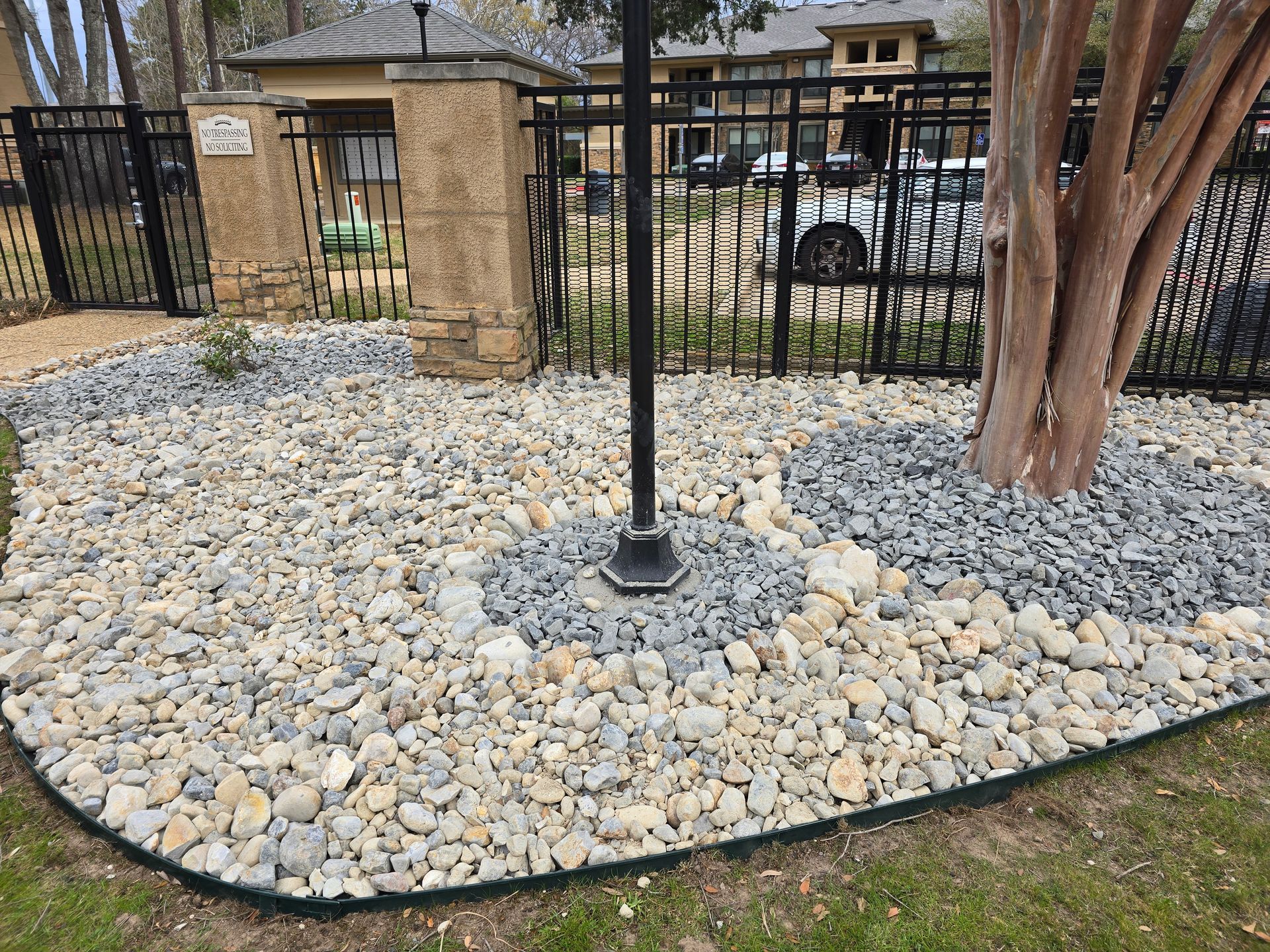
After a xeriscape installation, you'll notice that your outdoor space holds its color and structure even during dry periods when neighboring lawns start to fade. Drought-tolerant plants establish root systems that reach deeper into the soil, so they don't wilt or brown out as quickly when rainfall drops off. Decorative rock and mulch cover the ground between plants, keeping soil temperatures more stable and reducing the amount of water that evaporates before it reaches plant roots.
Legendary Landscapes LLC arranges plants and hardscape elements to create visual interest without relying on constant green coverage. You'll see groupings of native grasses, succulents, and perennials that bloom at different times, along with stone borders and pathways that define garden beds and walkways. The overall effect is a landscape that looks finished and deliberate, not sparse or neglected. Watering becomes something you do occasionally to support establishment or supplement rainfall, rather than a daily task that keeps your water meter spinning.
Xeriscape projects include soil amendment if needed, installation of drip irrigation or soaker hoses in targeted areas, and mulching to protect root zones. The work does not include traditional sod installation, high-water ornamental beds, or irrigation systems designed for frequent lawn watering. Maintenance requirements are lower than conventional landscapes, but you'll still need to manage weeds, refresh mulch periodically, and prune plants as they mature.
Homeowners in Tyler often wonder how xeriscaping will look compared to a traditional lawn and whether it will actually save water without leaving the yard looking bare.
Common Questions About Water-Efficient Landscaping
What plants are used in xeriscape designs?
Common choices include native grasses like buffalo grass and blue grama, along with perennials such as salvia, lantana, and yarrow that tolerate heat and limited water.
How much water does xeriscaping actually save?
Water use typically drops by half or more compared to traditional turf and ornamental beds, depending on the plants you replace and how much irrigation you currently run.
When do xeriscape plants need watering?
Newly installed plants need regular water for the first growing season to establish roots, after which most species only need supplemental water during extended dry periods.
Why use rock instead of mulch in some areas?
Rock doesn't decompose or need replacement, it reflects less heat than bare soil, and it works well in high-traffic zones where mulch would scatter or break down quickly.
What happens to existing irrigation systems?
Existing systems can be modified to focus on specific plant zones or converted to drip lines that deliver water directly to root zones instead of spraying it across broad areas.
If you're tired of watching your water bill climb every summer or dealing with plants that barely survive between rainstorms, xeriscaping gives you a yard that works with the climate instead of fighting it. Reach out to Legendary Landscapes LLC to talk through plant options and layout ideas that make sense for your property in Tyler.