
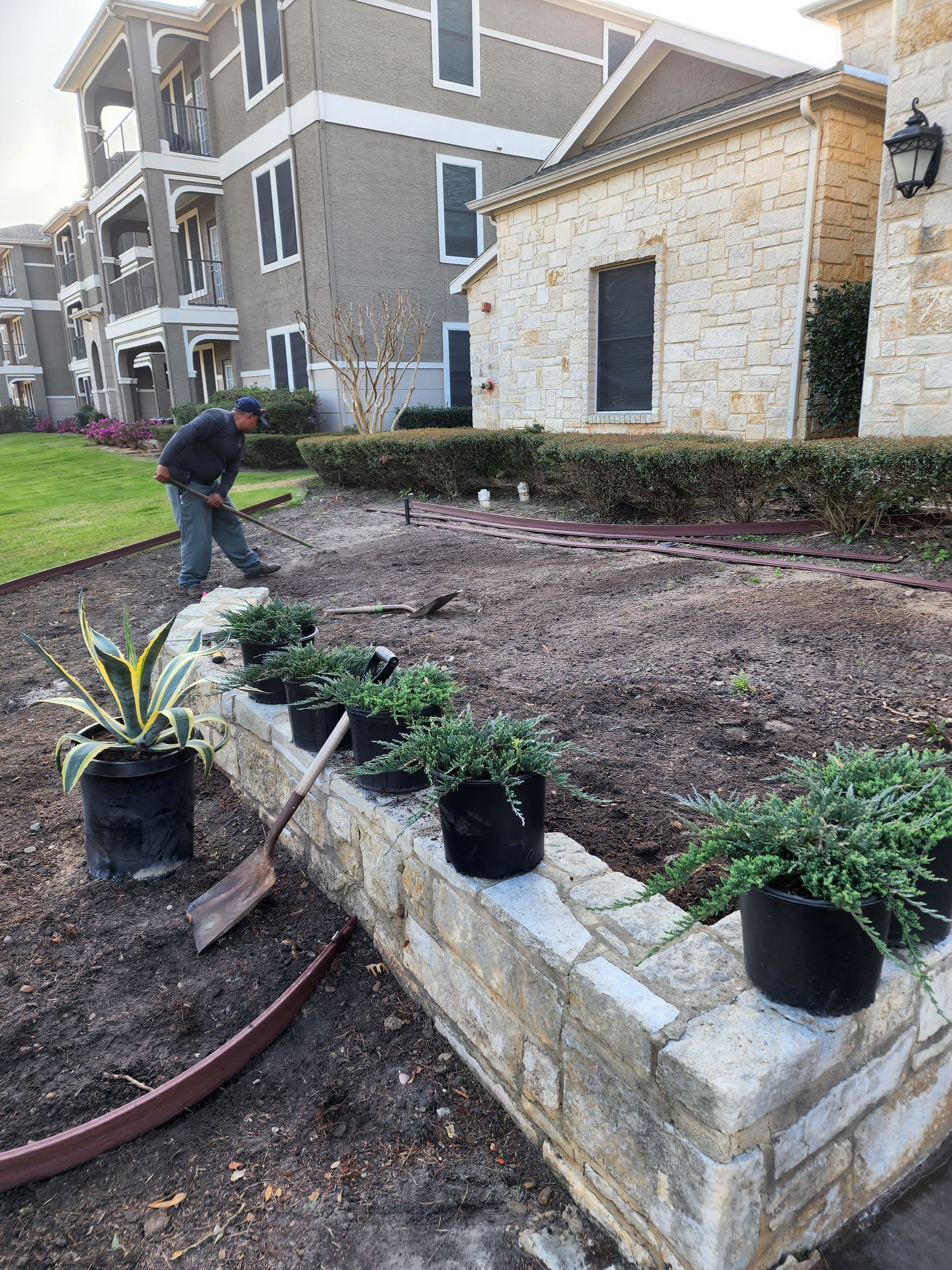
Hold Soil in Place on Sloped Ground
Retaining Walls in Tyler for yards losing soil to erosion or lacking usable flat space
Legendary Landscapes LLC builds retaining walls across Tyler and the surrounding area, stabilizing slopes and creating level zones where you can plant, walk, or place outdoor features without worrying about soil washing away. If your yard has a noticeable grade, bare spots where grass won't grow because the soil keeps sliding downhill, or areas where rainwater cuts channels and carries dirt into the street or onto neighboring property, a retaining wall stops the movement and gives you a permanent solution. These walls are constructed from stone, concrete blocks, or other durable materials that hold up under pressure and weather exposure.
Retaining walls work by holding back soil on one side while creating a level surface on the other, which allows you to use steep or uneven ground that would otherwise be difficult to landscape. Installation involves excavating the slope, building a stable base, and stacking materials in a way that distributes the load evenly and allows water to drain through or around the wall instead of building up behind it. In Tyler, where clay soil expands when wet and contracts when dry, drainage is a critical part of wall construction. Without proper drainage, hydrostatic pressure can push a wall forward or cause it to lean and crack over time.
If you're dealing with a sloped yard that's hard to manage or noticing erosion that keeps getting worse, reach out to discuss how a retaining wall could stabilize the area and open up usable space.
What You'll See Once the Wall Is Built
After a retaining wall is installed, you'll have a clear, level area where soil no longer shifts or washes away during heavy rain. The wall creates a visible edge that separates the slope from the flat zone, and you'll be able to plant grass, shrubs, or garden beds on the level side without worrying about them sliding downhill. Water that used to cut through the slope and carry soil with it will now drain through the wall's built-in drainage system or be redirected around the structure, so you won't see gullies or bare patches forming after every storm.
Legendary Landscapes LLC designs retaining walls to match the height and length needed for your property's grade, using materials that complement your existing landscape. The wall's face can be textured stone, smooth concrete blocks, or stacked natural stone depending on the look you're going for and the structural requirements of the site. You'll also notice that the retained area stays dry and stable, which makes it easier to maintain plantings or hardscape features like patios and pathways that tie into the wall.
Retaining wall projects include site excavation, base preparation, installation of drainage materials such as gravel and perforated pipe, and construction of the wall itself. The work does not include planting, irrigation, or grading work outside the immediate area of the wall. Walls over a certain height may require engineering or permits, depending on local regulations and the amount of soil being retained. Construction timelines vary based on wall length, site access, and weather conditions.
When planning a retaining wall in Tyler, homeowners often want to know how the wall will handle soil pressure and drainage, especially if they've seen other walls lean or crack.
What Homeowners Ask About Retaining Walls
What keeps a retaining wall from leaning forward over time?
Proper base preparation, backfill drainage, and the weight distribution of the materials all work together to resist the pressure from the soil behind the wall.
How does drainage work in a retaining wall?
Gravel backfill and perforated drain pipe are installed behind the wall to collect water and direct it away, preventing pressure buildup that could push the wall out of alignment.
When is a retaining wall required instead of regrading?
If your slope is steep enough that soil erodes quickly or you need to create a specific level area without moving large amounts of dirt off-site, a retaining wall is typically the more practical solution.
Why do some retaining walls crack or settle?
Cracks usually result from inadequate drainage, poor base compaction, or using materials that aren't rated for the height and load of the wall.
What's the maximum height for a retaining wall in Tyler?
Walls over four feet typically require engineering and permits to ensure they meet structural and safety standards, though exact requirements depend on local codes.
If your yard has a slope that's eroding or you're trying to create flat outdoor space where none exists, a retaining wall gives you a permanent structure that holds soil in place and opens up new possibilities for your landscape. Contact Legendary Landscapes LLC to talk through what's needed for your property and how the wall would be designed to handle your site's specific grade and drainage conditions.