
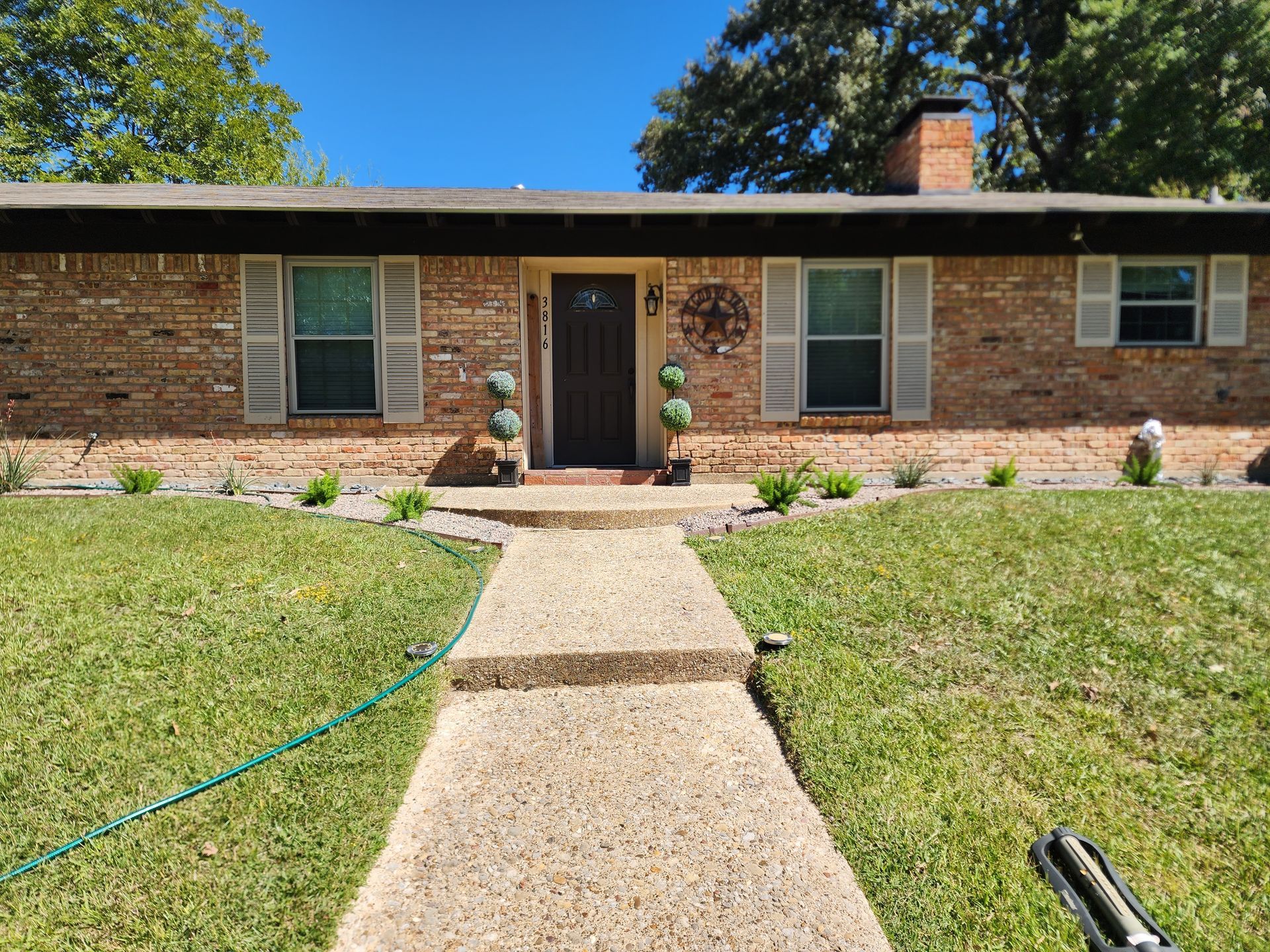
Connect Your Property With Defined Walkways
Walking Paths in Tyler for yards where navigation is unclear or ground stays muddy
Legendary Landscapes LLC installs walking paths throughout Tyler and the surrounding area, creating clear routes that connect outdoor spaces without forcing you to cut through grass or step over uneven ground. If you're walking from your driveway to your back door and there's no defined route, or if you're dealing with worn dirt tracks where grass won't grow because everyone takes the same shortcut, a walking path solves the problem with materials that stay stable and drain properly. These paths can be built from stone, gravel, pavers, or concrete, depending on the look you want and how the path will be used.
Walking paths make it easier to move through your yard by providing a solid surface that doesn't turn to mud when it rains or become slippery when wet. Installation involves laying out the route, excavating to the required depth, setting a compacted base, and installing the surface material in a way that sheds water and stays level over time. In Tyler, where clay soil holds water and can become slick or sticky after rain, a properly installed path gives you a firm, dry surface that handles foot traffic year-round without breaking down or developing ruts.
If you're tired of tracking mud indoors or navigating around wet spots every time it rains, reach out to discuss a walking path that fits your property layout and connects the areas you actually use.
How Pathways Change Outdoor Movement
Once a walking path is installed, you'll notice that moving through your yard becomes more straightforward and less messy. The path provides a clear, stable route that stays dry even after heavy rain, so you won't have to worry about muddy shoes or avoiding certain areas when the ground is wet. Grass or planting beds on either side of the path stay healthier because they're not being trampled, and the edges of the path create a visual boundary that organizes your landscape and makes it look more intentional.
Legendary Landscapes LLC designs paths to follow natural movement patterns and connect key areas such as driveways, patios, garden beds, and entry points. The surface material is chosen based on the path's function and your aesthetic preferences, and the path is graded to drain water off to the sides instead of letting it pool on the walking surface. You'll also see that the path holds up under regular use without sinking, shifting, or developing gaps where weeds can push through, especially when edge restraints and proper base materials are used.
Walking path projects include site preparation, base installation, and surface material placement. The work does not include irrigation, lighting, or landscape planting along the path, though these elements can be coordinated separately if desired. Path width and material choices depend on how the path will be used, whether it's a narrow garden route or a wider walkway meant for regular foot traffic. Installation timelines vary based on path length, site access, and ground conditions.
Homeowners in Tyler often ask about material options and how to make sure a path will hold up under regular use without requiring constant maintenance.
Questions About Path Design and Materials
What materials are best for walking paths?
Gravel and decomposed granite are affordable and drain well, while stone pavers and flagstone offer a more finished look and handle heavy foot traffic without shifting.
How wide should a walking path be?
A path meant for one person can be as narrow as two feet, while a path that needs to accommodate two people walking side by side should be at least four feet wide.
When does a path need edging?
Edging keeps materials like gravel or pavers from spreading into surrounding grass or soil, and it's especially important on paths with loose or modular surface materials.
Why do some paths develop low spots or puddles?
Low spots usually form when the base isn't compacted properly or when the path isn't graded to shed water, allowing it to settle unevenly or hold moisture.
What kind of base is required under a walking path in Tyler?
A compacted gravel base is standard for most paths, providing stability and drainage that prevents the surface material from sinking into the clay soil underneath.
If you're navigating your yard without a clear route or dealing with muddy, uneven ground every time you walk from one area to another, a walking path gives you a permanent, low-maintenance solution. Contact Legendary Landscapes LLC to talk through layout options and materials that make sense for your property and how you use your outdoor space.